At the IMO this quarter: The decisions shaping the future of life at sea
22 July 2026
6 min read
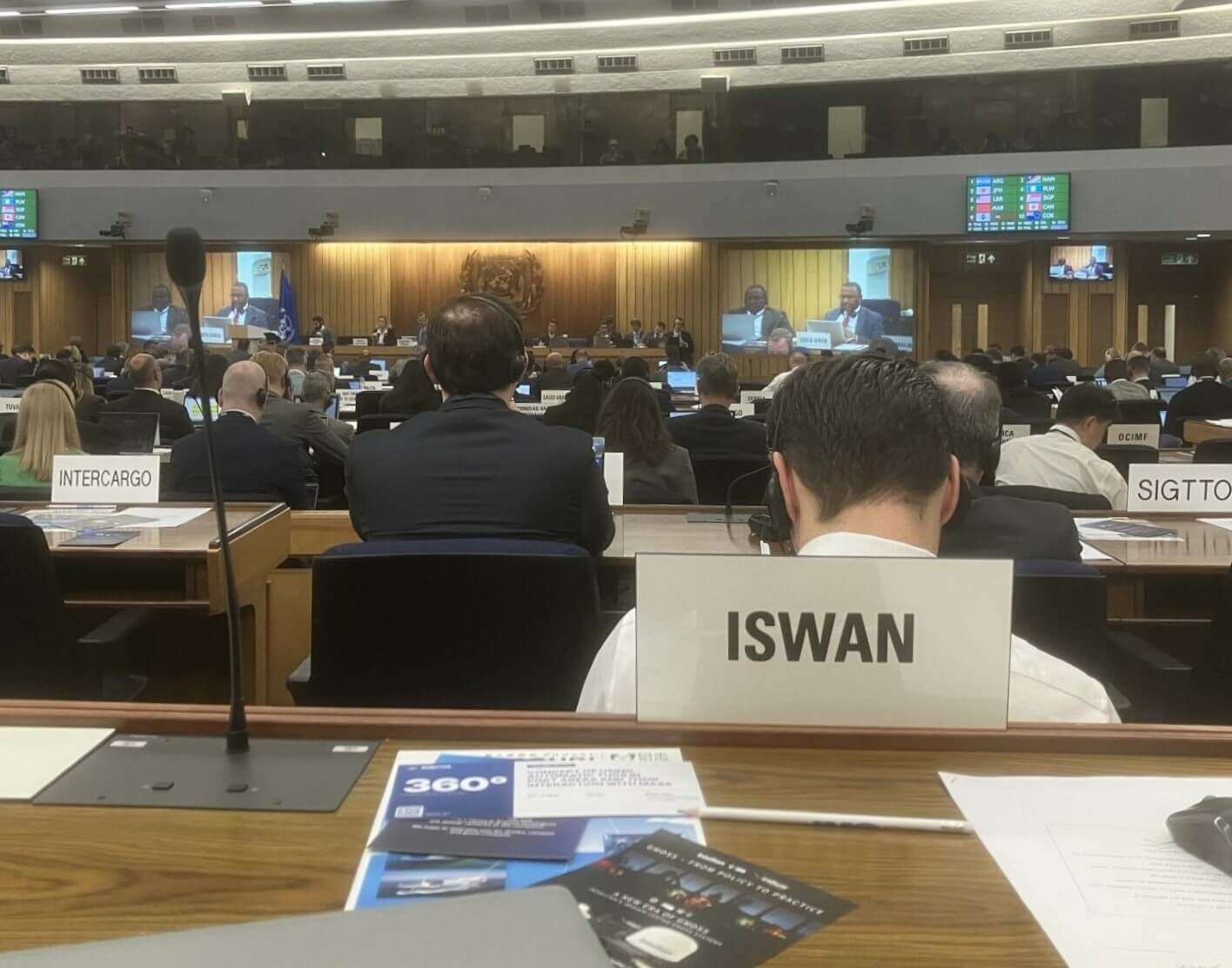
ISWAN has continued to strengthen our engagement at the International Maritime Organization (IMO) over the last quarter.

A reflection on Prof. Jay A. Yacat’s keynote at ISWAN - Philippines' BAYANIHAN

A room built for one question
BAYANIHAN carried the theme “Reframing Mental Health: A Filipino Perspective” and ran as a half-day hybrid event on 10 November 2025 at Ramada by Wyndham Manila Central in Binondo, Manila, to ask a practical question that many of us carry into every case, call, and conversation: what does mental health support look like when Filipino realities lead the design, not follow behind it. Within the programme, Prof. Jay A. Yacat’s keynote sat at the center of that aim under the theme Sikolohiyang Pilipino sa Kontekstong Maritima (Filipino Psychology in the Maritime Context), and it gave the room shared language for experiences that are often felt deeply but explained poorly. His presentation is entitled, “Silent and Silenced: Applying Sikolohiyang Pilipino to understand Filipino seafarers’ distress.”
The numbers, then the human cost
Prof. Yacat began with scale because global shipping often speaks in numbers before it speaks in lives. He cited more than 504,000 Filipino seafarers deployed in 2024 and described Filipino seafarers as the backbone of international shipping, with Filipinos making up one-quarter of seafarers globally. He also cited the economic narrative that usually follows, including a $7 billion annual contribution and the claim of “10% of PH gross domestic product (GDP),” and then he paused on what that framing can hide: it often obscures the human costs of maritime labor.

Distress starts with separation
When Prof. Yacat named what weighs heaviest, he did not start with a diagnosis. He said the strongest stressor is not the work itself, but the pain of being away from family for prolonged periods of time. He then described how that pain gets compounded onboard through long periods of isolation, unpredictable work hours, and interpersonal conflicts, showing how distress can build quietly through routine rather than through a single dramatic event.
Prof. Yacat also located distress inside the conditions that shape what seafarers can safely say and do. He discussed the Flag of Convenience system and connected it to contractual insecurity and limited labor protections, pointing to how vulnerability can be produced by structure rather than by personality. In that framing, “coping” stops sounding like a private skill problem and starts sounding like a question of workplace safety, protection, and what people risk when they speak.
The resilience trap
One of the clearest warnings of the keynote was what Prof. Yacat called the “Resilience Trap.” He described Filipino seafarers as stereotyped and marketed as obedient, compliant, resilient, hardworking, happy, and cooperative, and he also said that the state is complicit in framing them as “ideal for export.” He warned that this story is not harmless because it can make suffering less visible, justify neglect of mental health and labor rights, and pressure emotional suppression, so the same narrative that helps keep employment pipelines moving can also keep distress unnamed and unsupported.
Loob, labas, and the work of pakikiramdam
Prof. Yacat did not dismiss care or clinical practice, but he questioned what gets missed when tools assume distress must appear in one familiar format. He explained that standard Western mental health models can be a poor fit because they focus on individual symptoms, use diagnostic categories that miss Filipino cultural nuances of distress, and often lack cultural resonance. He put it plainly: Western tools look for “depressed mood,” and he said this misses the point because distress may be voiced as masama ang pakiramdam (feeling unwell) or mabigat ang loob (heavy-hearted), and it can also appear through physical symptoms that carry emotional meaning.
To explain why distress may look “invisible” to outsiders, Prof. Yacat brought the room into key ideas from Sikolohiyang Pilipino (Filipino Psychology). He explained loob (inner being) as connected to inner states and moral core, while labas (outer expression) offers signs that do not always match what is carried inside. He then explained pakikiramdam (sensing what is felt but not said) as the work people do to navigate that gap, especially when direct disclosure feels risky, inappropriate, or simply not the habit.
Kapwa explains why support often stays onboard
Prof. Yacat used a word that does not translate cleanly into English: kapwa. People sometimes translate it loosely as “others,” but he explained why that shortcut breaks down, because kapwa is not about a separate “them.” He defined kapwa as a shared identity of self and other, strongest with Hindi Ibang Tao (not an outsider), such as family or close friends, and in practice it is best captured as “the other-as-self,” where “self” and “other” are not treated as separate.
In his logic, this matters because distress and relief are not only internal experiences that sit inside one person; they are relational realities that rise and fall with belonging, trust, and acceptance. He said many seafarers rarely tell their families about psychological struggles because they do not want to worry or cause distress to loved ones, and through kapwa (the other-as-self), that silence can function as protection, not only avoidance. He also explained that many seafarers rely on trusted kabaro (shipmates), where emotional release happens through kuwentuhan (story-sharing), shared meals, and casual banter, because those spaces allow connection without forcing someone to perform strength or translate pain into formal categories.

Silent and silenced
Prof. Yacat distinguished between two kinds of suffering onboard, and the difference is easy to miss if we only look at the surface. “Silent” suffering refers to a seafarer withholding complaints or emotional pain to protect family or crewmates, while “silenced” suffering points to suppression driven by power hierarchies and fear of retaliation. He linked this to the hierarchical nature of maritime spaces and the precarity of protections, and he explained why speaking up can feel risky even when someone badly needs support.
Hiya, and why help-seeking can feel dangerous
Prof. Yacat treated hiya (shame or propriety) as a force that regulates expression, not a personality flaw. He explained that emotional distress can be regulated by hiya, and that losing control publicly can be seen as nakakahiya (shameful or embarrassing). He also pointed to rank, noting that displeasure expressed by lower-ranked crew toward a superior can be labeled walang hiya (disrespectful; “without shame”), which helps explain why disclosure can feel dangerous when reputation, evaluation, and contract security sit in the background.
Ginhawa changes what “wellbeing” means
The keynote offered a different way to name wellness, and Prof. Yacat treated it as a practical lens rather than a poetic idea. He said ginhawa (relief or wellness) is relational, and he explained that people experience ginhawa when they feel seen or accepted by their kapwa (the other-as-self), captured in the line Hindi ka nag-iisa (you are not alone). He also said people feel ginhawa when relationships are in order, and he explained that ginhawa can be felt when one’s kapwa experiences ginhawa, which shifts the target of mental health work from symptom control alone to relational safety and belonging.
Prof. Yacat added a point in delivery that many in the room carried out with them: he said he does not know mental health models that take all these relational dimensions into account. That statement does not reject Western frameworks outright, but it places a limit on what they can claim as complete for Filipinos. If wellness is tied to being seen, being accepted, and having relationships that hold, then support must be built to protect and restore those conditions, not only to measure what is happening inside one individual.

Call to action
Prof. Yacat ended with directions that stayed consistent with what he had already named. He pointed to peer-led support circles grounded in pakikipagkapwa (relating through shared personhood) and kuwentuhan (story-sharing), and he spoke about protecting everyday spaces where ginhawa (relief or wellness) can emerge, such as music, prayer, humor, and shared meals. He also pointed to training that reflects how distress is sensed in Filipino contexts, including pakiramdam-based response (sensing and responding to what is felt but not said) and family-based approaches that account for emotional withholding.
He also named system-level moves that respond to the “silenced” side of suffering, including culturally informed protocols, treating silence and emotional suppression as occupational hazards, and protecting people who report abuse and exploitation. These directions do not ask seafarers to carry the whole burden of adaptation. They ask institutions, employers, and support systems to meet seafarers where they already are, in the relationships and realities that shape life onboard.
What we left the room holding
BAYANIHAN created space for a Filipino lens to lead, and Prof. Yacat’s keynote showed why that leadership matters in everyday welfare work. His argument was not that Filipino seafarers need less rigor; it was that they need language and support that match how distress and relief are lived in relationships, in hierarchies, and in the daily conditions of shipboard life. When a seafarer stays quiet, his keynote asks us not to mistake that quiet for wellness, and not to treat silence as proof that support is unnecessary; it asks us to ask better questions about what silence is protecting and what silence is risking.
By: Marville Cullen Espago
22 July 2026
6 min read
ISWAN has continued to strengthen our engagement at the International Maritime Organization (IMO) over the last quarter.
8 July 2026
5 min read
The new SeafarerHelp 2025 Annual Review offers a unique insight into the realities of life at sea through thousands of confidential helpline conversations.

27 May 2026
4 min read
ISWAN’s ambassador network continues to grow across regions, strengthening awareness and support for seafarers and their families worldwide.