At the IMO this quarter: The decisions shaping the future of life at sea
22 July 2026
6 min read
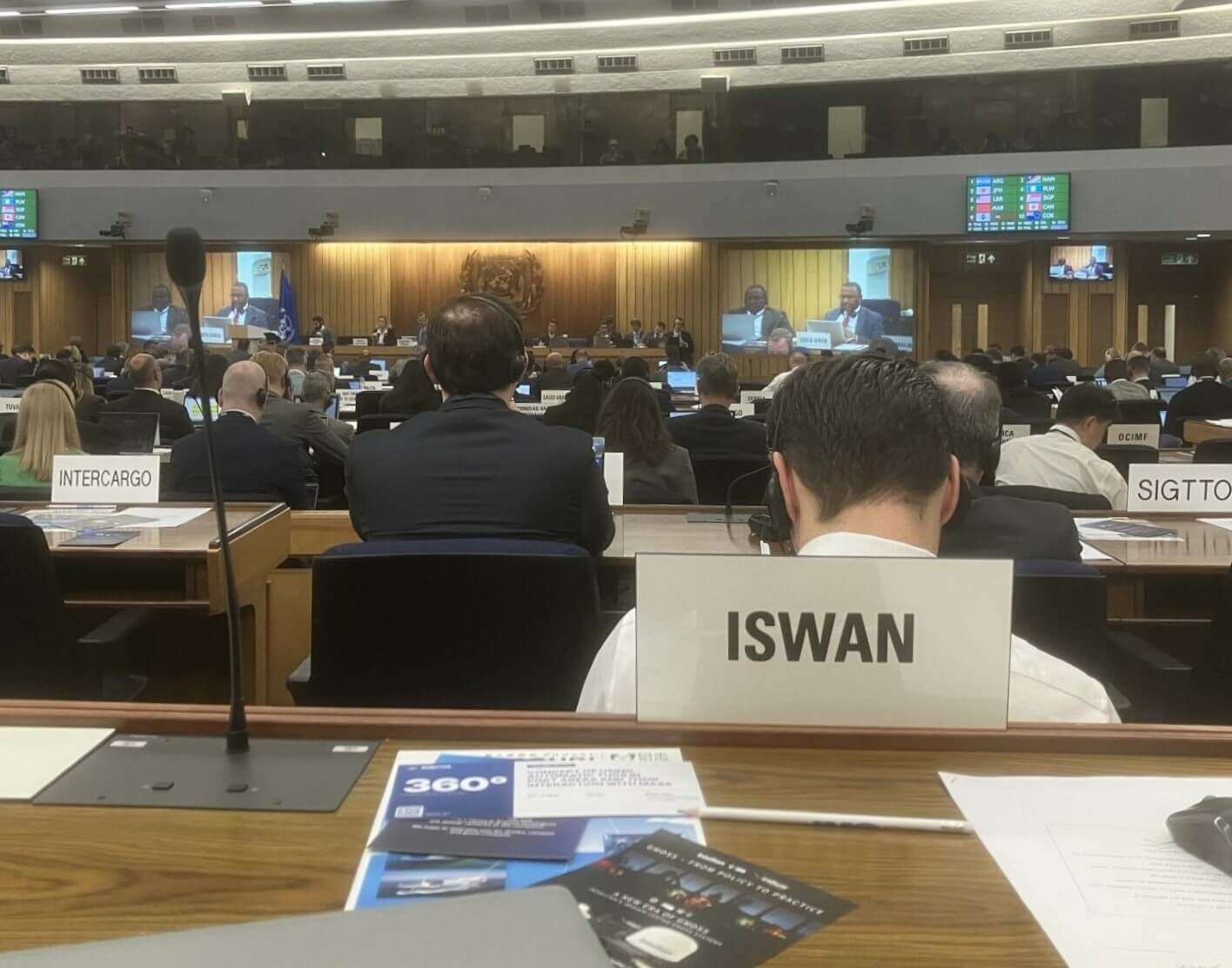
ISWAN has continued to strengthen our engagement at the International Maritime Organization (IMO) over the last quarter.

Since achieving consultative status, ISWAN has been actively engaging at the IMO to amplify seafarers’ voices in global decision‑making.
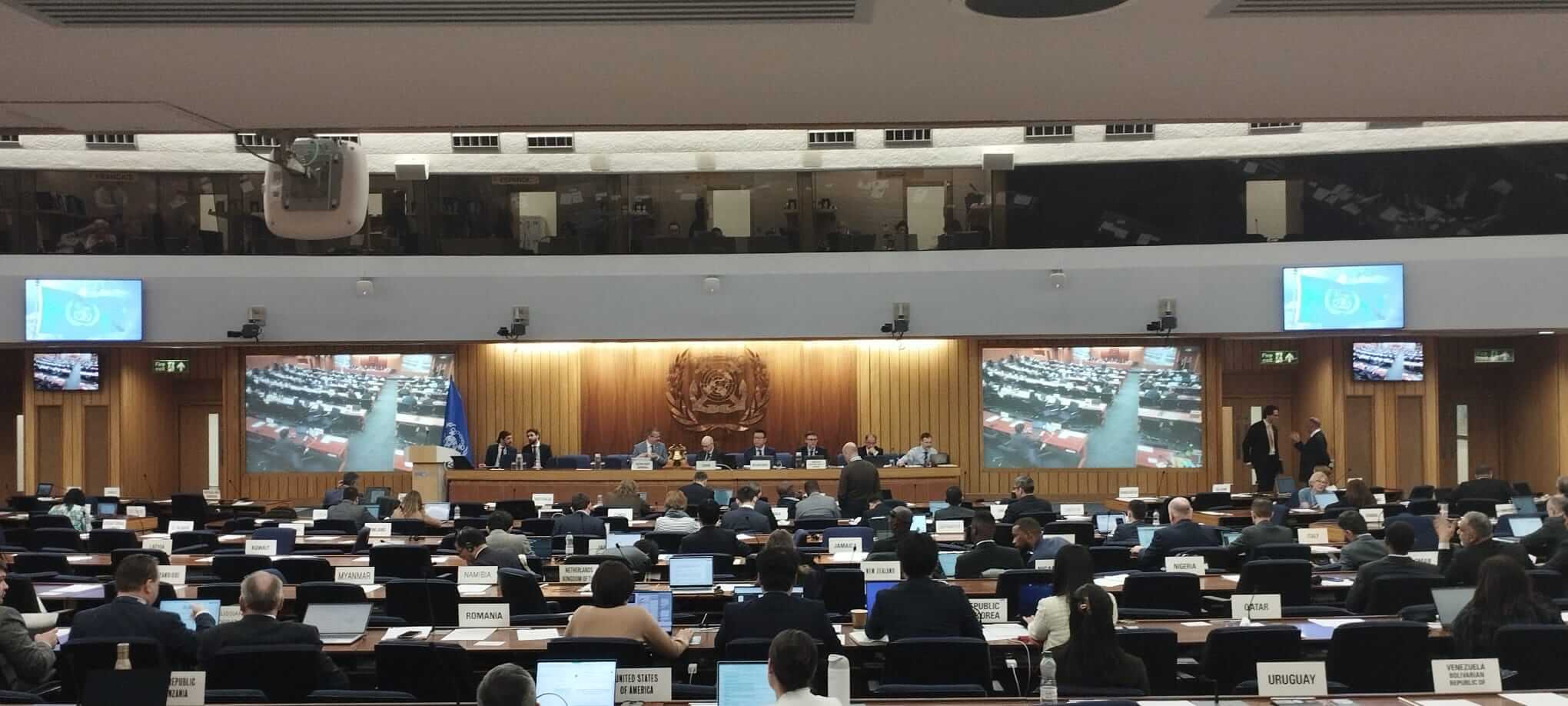
In December 2025, ISWAN was granted consultative status at the International Maritime Organization (IMO), the United Nations agency responsible for setting international standards for maritime safety, security and environmental protection. This marked an important milestone for ISWAN, strengthening our ability to ensure that seafarers’ lived experiences are reflected in global maritime policy development.
From the outset, ISWAN’s engagement at the IMO has focused on amplifying seafarers’ voices by sharing evidence drawn directly from our helplines and frontline welfare work. We aim to use these real‑world insights to help bridge the gap between regulation and practice, demonstrating how policies affect seafarers day‑to‑day and where further action is needed to protect welfare, safety and dignity at sea.
ISWAN’s first sub‑committee engagement took place at the twelfth session of the IMO Sub‑Committee on Human Element, Training and Watchkeeping (HTW 12) in February 2026. The HTW Sub‑Committee is responsible for issues relating to seafarer training, certification, watchkeeping and the human element of ship operations under the International Convention on Standards of Training, Certification and Watchkeeping for Seafarers (STCW).
Several agenda items at HTW 12 were closely aligned with ISWAN’s welfare mandate. These included seafarer fatigue and the management of hours of work and rest, an issue consistently highlighted through ISWAN’s helplines. HTW 12 launched a new workstream on fatigue to examine the effectiveness of existing IMO provisions and how they are implemented in practice. ISWAN has joined the Correspondence Group established to take this work forward ahead of the next HTW session in 2027, helping to strengthen the representation of seafarers’ lived experiences within this process.
HTW 12 also continued the comprehensive review of the STCW Convention and Code, aimed at modernising global standards so they remain relevant in a rapidly changing industry. Alongside technical updates, the Sub‑Committee considered opportunities to expand and strengthen provisions related to welfare, including violence and harassment (including sexual harassment and sexual assault), mental health and psychological safety, and gender and cultural diversity. The meeting validated IMO model courses on violence and harassment and finalised interim training guidelines for seafarers working with alternative fuels, recognising the new risks posed by emerging technologies.
ISWAN also participated online in an Extraordinary Session of the IMO Council convened in response to the crisis in the Gulf region, which has left an estimated 20,000 seafarers trapped onboard vessels.
During this session, ISWAN co‑sponsored a joint NGO submission calling for practical measures to safeguard seafarer safety and welfare. This engagement highlighted the importance of ensuring that seafarer wellbeing remains central in emergency‑ and crisis‑driven decision‑making at the international level.
In April 2026, ISWAN attended the 113th session of the IMO Legal Committee (LEG 113), which addresses legal matters including liability, compensation, jurisdiction and the fair treatment of seafarers.
Several agenda items were directly relevant to seafarer welfare. The Committee considered the sharp rise in seafarer abandonment cases recorded on the joint ILO/IMO database, with 410 new cases reported in 2025, affecting more than 6,000 seafarers. ISWAN delivered an intervention grounded in anonymised helpline data, highlighting the ongoing human impact of abandonment, including unpaid wages, lack of food and medical care, delays in repatriation and serious mental health consequences.
In response, the Committee urged States to apply the 2022 ILO/IMO Guidelines on how to deal with seafarer abandonment cases, as well as fully ratifying and implementing the Maritime Labour Convention (MLC), including 2014 amendments requiring shipowners to have insurance or equivalent financial guarantees in place. It also requested that the Joint ILO/IMO Tripartite Working Group consider developing standard operational procedures to sit alongside the ILO/IMO abandonment database, ensuring faster and more effective responses in urgent abandonment situations.
The Committee also reiterated the importance of promoting and implementing the 2024 IMO/ILO Guidelines on fair treatment of seafarers detained in connection with alleged crimes, and agreed draft guidelines to address fraudulent ship registration practices.
These early activities represent an important foundation for ISWAN’s role as an IMO consultative member. By bringing evidence from seafarers’ lived experiences into international policy discussions, ISWAN aims to contribute to wider efforts to ensure that welfare, fair treatment and human dignity remain central to decisions that shape life at sea.
We look forward to continuing this work in close collaboration with the wider maritime community, helping to ensure that global standards are informed by those who experience their consequences every day.
22 July 2026
6 min read
ISWAN has continued to strengthen our engagement at the International Maritime Organization (IMO) over the last quarter.
8 July 2026
5 min read
The new SeafarerHelp 2025 Annual Review offers a unique insight into the realities of life at sea through thousands of confidential helpline conversations.

27 May 2026
4 min read
ISWAN’s ambassador network continues to grow across regions, strengthening awareness and support for seafarers and their families worldwide.