When Silence Looks Like Strength
21 May 2026
2 min read
A reflection on Prof. Jay A. Yacat’s keynote at ISWAN - Philippines' BAYANIHAN

Alina Prylipko discusses whether the shipping industry’s social sustainability actions are truly informed by seafarers’ needs and priorities, and shares some fascinating insights from her PhD research with the World Maritime University.
Each month, we share a discussion piece written by a guest author from the maritime sector who can offer a unique or interesting perspective on an aspect of seafarers’ welfare. You can join the conversation on our social media channels – LinkedIn and Facebook.
This month, Alina Prylipko discusses whether the shipping industry’s social sustainability actions are truly informed by seafarers’ needs and priorities, and shares some fascinating insights from her PhD research with the World Maritime University.

Alina Prylipko is a maritime expert and educator dedicated to advancing social sustainability within the shipping industry. Holding an LLM in International Public Law and an MSc in Maritime Education and Training, she is currently pursuing her PhD at the World Maritime University, focusing on seafarers as stakeholders in sustainable development. A working mother and spouse to a former seafarer, Alina has a personal connection to the challenges seafarers and their families face.
Sustainable development in the maritime industry is finally taking shape. When the UN adopted the 2030 Agenda for Sustainable Development in 2015, the path ahead was unclear. Looking back at the International Maritime Organization’s (IMO) Concept for a Sustainable Transport System, it is striking to see how much progress has been made over the past decade. Of course, socio-economic realities (the pandemic, security threats, geopolitical upheavals, and economic disruptions) continue to reshape priorities. Yet, despite these challenges, the path forward is becoming clearer.
The ‘people dimension’ of sustainability is also gaining attention. Early discussions were narrow, often focused only on the ‘continuous supply of suitably qualified seafarers’. Today, the conversation is broader, encompassing diversity, education, mental health, and other social matters.
But a critical question remains: are industry social sustainability actions truly informed by seafarers’ needs and interests? What are seafarers’ most pressing concerns? Do they feel their voices are heard? How can the industry ensure ongoing engagement with evolving needs?
As part of my doctoral research, I have conducted 43 interviews with industry stakeholders and received 318 survey responses from seafarers across different nationalities, vessel types, and onboard positions.
The findings are striking: seafarers rank ‘just transition’ measures, such as training for decarbonisation, among their lowest priorities. They also express relatively limited concern for issues like bullying and harassment, diversity and inclusion, and anti-corruption, underscoring a clear gap between industry narratives and the realities of life at sea.
Instead, their top priorities are:
The question is not only which issues matter most to seafarers, but also how satisfied they are with the industry’s response. Here the picture is concerning.
Seafarers are most dissatisfied with social security provisions, in particular, the lack of permanent contracts, pension schemes, and adequate healthcare. This raises a critical question: how can the industry hope to attract and retain seafarers if it cannot offer the basic securities that are guaranteed for many other professions? I am deeply sceptical about the popular idea of promoting seafaring careers through school visits. Before encouraging young people and their parents to consider this profession, we must be honest about the realities at sea.
The second-lowest area of satisfaction is working and living conditions. Excessive hours, limited connectivity, and restricted shore leave make the profession far less appealing, especially to younger generations who expect better work–life integration.
Family-related aspects rank third from the bottom, further weakening the industry’s ability to appeal to new entrants and posing an additional barrier to increasing the participation of women in seafaring.
So, who is failing seafarers? When asked who bears responsibility, seafarers point to all stakeholders: IMO, International Labour Organization (ILO), shipowners, crewing agencies, flag states, and countries of nationality. That said, seafarers are most disappointed with their countries of nationality, while flag states are perceived somewhat more positively, performing better than other regulators. This raises an uncomfortable question: should the debate really be about “flags of convenience,” or is it time to confront the reality of “nationalities of inconvenience”?
And what about shipowners? Policies and procedures may exist on paper, but implementation is lacking. Shipowners rarely hear directly from their seafarers; and when feedback mechanisms exist, seafarers often do not feel safe using them. As one might ask: why speak up if you are only valued for operational efficiency?
Trust remains a fragile currency. Seafarers place their confidence in themselves, as well as in IMO, ILO, port state control officers, unions, and charities. They are far less convinced that consumers or cargo owners will drive the social agenda.
If only more cargo owners, shippers, and charterers cared… Seafarers believe that their involvement could fundamentally change the situation. Yet, during interviews with this group of stakeholders, only a handful of early movers had developed specific codes of conduct. Even then, social sustainability often came with an extra charge for service – meeting minimum legal obligations.
Academically, sustainability is a social problem: it stems from human decisions, technological choices, and power dynamics among stakeholders. Thus, people are a precondition for any aspect of sustainable development. Yet, in shipping, human-related aspects are too often sacrificed for business efficiency.
Industry discourse remains dominated by economics and environment, with ‘social’ framed largely in terms of training for greener fuels. But this misses the point: seafarers’ wellbeing, rights, and families are at the heart of true social sustainability.
If the industry wants to attract and retain seafarers, it must do more than prepare them for decarbonisation. It must address their real needs: security, dignity, family, and fair working conditions. As research shows, seafarers’ voices are clear, but too often ignored. The question now is not what they need, but whether the maritime industry is ready to listen.
This article draws on preliminary findings from PhD research on seafarers’ perspectives in social sustainability. To strengthen this work, we invite seafarers to share their views by completing Alina’s ongoing survey. Your insights will directly contribute to shaping a more people-centred maritime future. The survey can be found here: www.surveymonkey.com/r/BT9BFKB

21 May 2026
2 min read
A reflection on Prof. Jay A. Yacat’s keynote at ISWAN - Philippines' BAYANIHAN
4 May 2026
1 min read
ISWAN India Association has signed a Memorandum of Understanding with the Maritime Association of Shipowners, Ship Managers and Agents (MASSA) to bring the "Together in Care" Shore Staff Wellbeing Workshop to more maritime professionals across India.
28 April 2026
4 min read
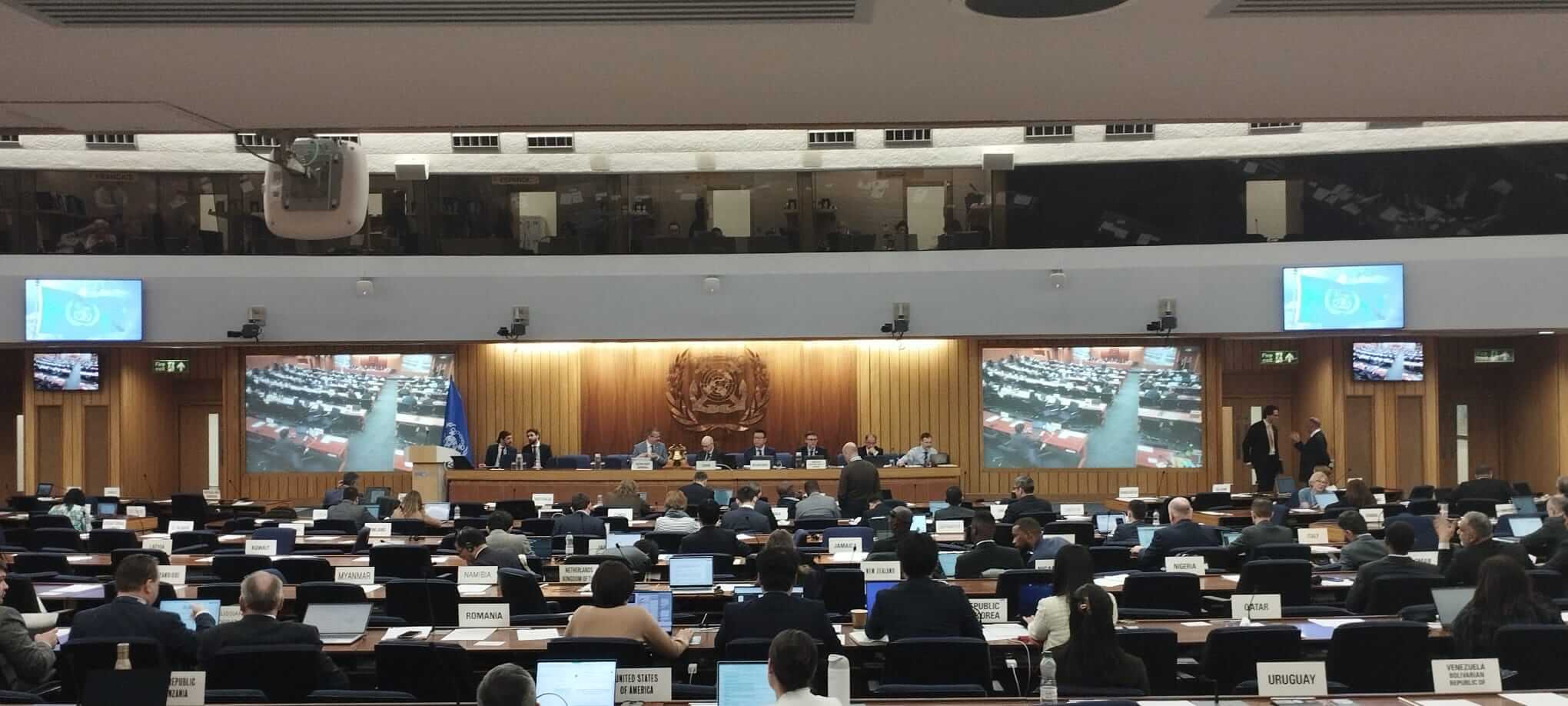
Since achieving consultative status, ISWAN has been actively engaging at the IMO to amplify seafarers’ voices in global decision‑making.