What yacht crew are telling us: Insights from YachtCrewHelp 2025
7 October 2026
3 min read
The YachtCrewHelp 2025 Annual Review brings together insights from confidential conversations with yacht crew and their families throughout 2025.

ISWAN has continued to strengthen our engagement at the International Maritime Organization (IMO) over the last quarter.
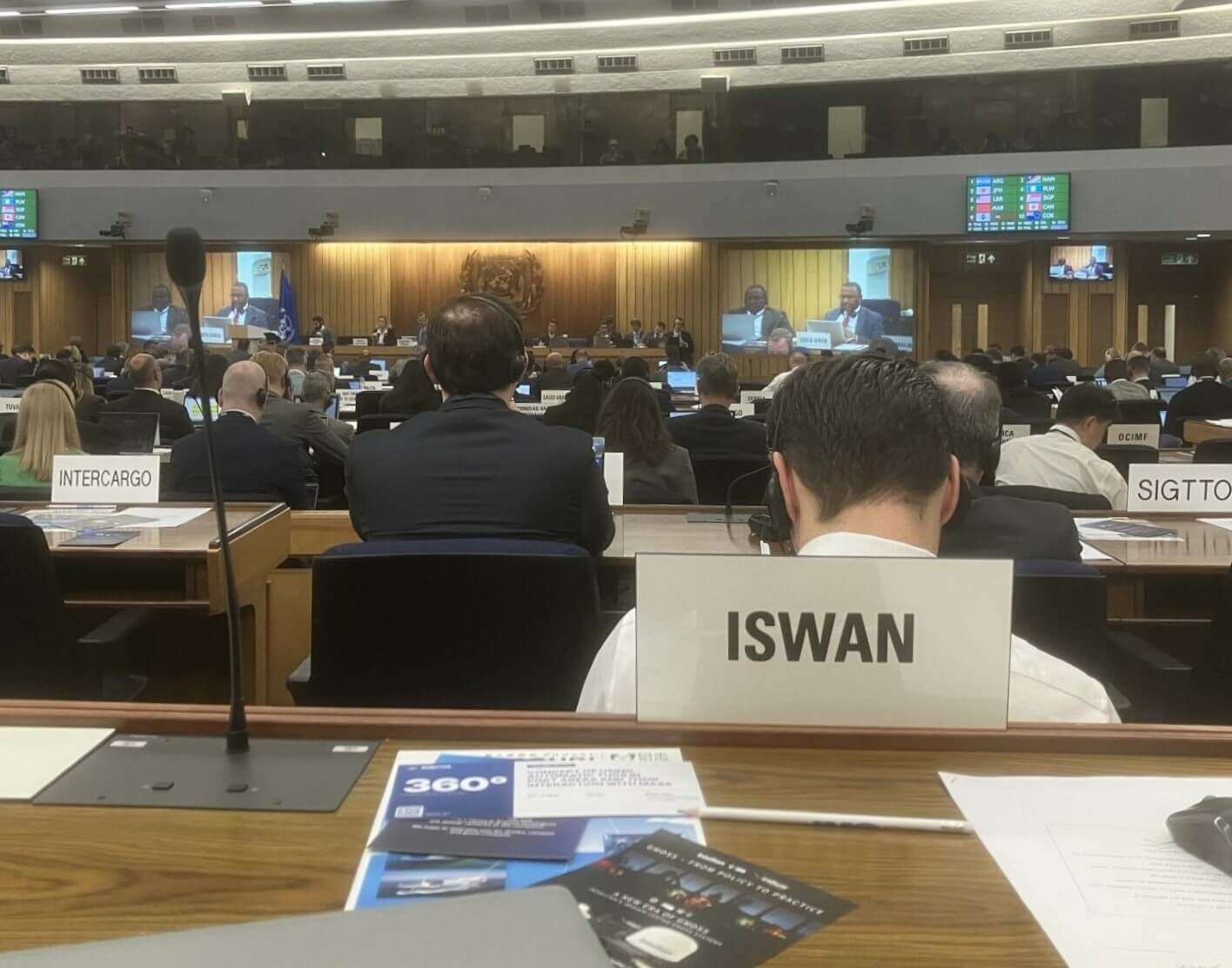
The International Maritime Organization (IMO) is often associated with highly technical discussions on ship safety, regulations and maritime governance. Yet behind every agenda item are people – the seafarers whose safety, wellbeing and working lives are shaped by international standards and policies.
Over the past quarter, ISWAN has continued to strengthen our engagement at the IMO. While many of these discussions can seem distant from everyday life at sea, the decisions made at the IMO help determine everything from the technologies seafarers work with, to onboard safety and the support available during crises. From the future of autonomous shipping to workforce diversity and support for seafarers affected by regional crises, many of the issues under discussion have direct implications for seafarers around the world.
Here are some of the themes that stood out this quarter.
One of the most significant developments this quarter came at the Maritime Safety Committee (MSC 111), where Member States adopted the new non-mandatory International Code of Safety for Maritime Autonomous Surface Ships (MASS Code). The Code represents the culmination of many years of international work to develop a framework for the safe operation of autonomous and remotely operated vessels. It is intended to ensure that these ships achieve standards of safety, security and environmental protection equivalent to those expected of conventional ships, while paving the way for a future mandatory code.
For ISWAN, the real significance of the MASS Code is not what it means for ships, but what it means for the future of seafaring. Decisions being made today will help define what the profession of seafaring looks like in the future: from the skills and responsibilities seafarers will need, to the attractiveness and sustainability of seafaring as a career. There is a real opportunity to reimagine seafaring for the digital age, but ensuring it remains a safe, rewarding and fulfilling profession must remain central to that transition. The adoption of the MASS Code is therefore not the end of the conversation, but an important milestone in influencing how technology and people will work together at sea in the years ahead.
MSC 111 also continued work on the regulatory framework for ships using alternative fuels, approving guidance for vessels using hydrogen and ammonia, alongside new training guidance for seafarers working with ammonia and methanol/ethanol fuels. As shipping transitions towards new technologies and energy sources, ensuring seafarers have the training, skills and support to work safely in evolving onboard environments will become increasingly important.
For ISWAN, the transition to new fuels also highlights the importance of psychological safety. Safe operations depend not only on technical knowledge, but on whether seafarers feel confident speaking up about mistakes, near misses, equipment concerns and emerging risks without fear of blame or negative consequences. As the industry adopts new technologies and fuels, fostering strong safety-reporting cultures will be just as important as developing new technical competencies.
The prolonged stranding of seafarers in the Straits of Hormuz remained an urgent topic of debate at the IMO. During MSC 111, Member States adopted a resolution supporting efforts to facilitate the safe evacuation of ships and seafarers affected by the situation in the region and encouraged practical welfare measures, including crew-change support, family communication and helpline services.
These discussions serve as a reminder that geopolitical crises can quickly become welfare issues for seafarers. Seafarers can face prolonged uncertainty, extended periods at sea, disruption to crew changes, concerns about safety and difficulties communicating with their families. Ensuring that their needs remain visible and are prioritised during international crisis response is therefore essential.
The maritime sector continues to face challenges in attracting and retaining a diverse workforce. While progress has been made, barriers to participation remain for many groups, and creating truly inclusive working environments requires sustained effort across education, recruitment, training and workplace culture.
This quarter, ISWAN co-sponsored a paper at the Technical Cooperation Committee (TC 76) focused on empowering women and promoting diversity, equality, equity and inclusion (DEEI) across the maritime sector. Following discussion at the Committee, the IMO Secretariat will explore how other UN bodies have addressed DEEI issues in the context of capacity building and will report back to the next Technical Cooperation Committee meeting.
For ISWAN, diversity is fundamentally a welfare issue. Research and frontline experience consistently demonstrate that inclusion, psychological safety, dignity and respect are closely linked to wellbeing. Ensuring that maritime careers are accessible to a wider range of people helps create stronger, healthier and more resilient workplaces onboard and ashore. We will continue to follow the progress of this work at an IMO level.
Another important theme at TC 76 was the challenge of translating international standards into practical action.
The Committee highlighted the importance of strengthening IMO’s regional presence and delivering support closer to where it is needed. Following the meeting, IMO announced the appointment of Regional Coordinators to lead the IMO’s seven Regional Presence Offices (RPOs), which are tasked with connecting global maritime priorities with regional realities across areas including safety, training, gender equality and capacity development.
While less visible than major policy decisions, this work matters because international standards only improve lives at sea when they can be effectively implemented. A stronger regional presence can help ensure that expertise, support and practical assistance reach maritime communities where they are most needed.
For organisations working in seafarer welfare, this principle is familiar. Real progress depends not only on the policies that are agreed internationally, but also on whether support reaches people in practice.
Many IMO discussions are necessarily technical. However, the outcomes influence the conditions under which seafarers live and work every day.
Whether the topic is emerging technologies, workforce diversity, capacity development or crisis response, ISWAN’s role is to help ensure that the human impact of policy decisions remains visible. By bringing evidence from our helplines, research and welfare projects into international discussions, we aim to ensure that policy discussions are informed by the realities of seafarers’ lived experience and to connect global policymaking with the challenges experienced by seafarers around the world.
As the maritime sector continues to evolve, that connection between policy and lived experience will remain essential. The technical discussions taking place at the IMO today will help shape the future of life at sea tomorrow, making it more important than ever that seafarers’ experiences are part of the conversation.
7 October 2026
3 min read
The YachtCrewHelp 2025 Annual Review brings together insights from confidential conversations with yacht crew and their families throughout 2025.
8 July 2026
5 min read
The new SeafarerHelp 2025 Annual Review offers a unique insight into the realities of life at sea through thousands of confidential helpline conversations.

27 May 2026
4 min read
ISWAN’s ambassador network continues to grow across regions, strengthening awareness and support for seafarers and their families worldwide.